Showing posts with label moscow. Show all posts

Wednesday, 2 October 2019

Straight into the deep end.

Back to Moscow after 8 months away. The most surreal, outer-body experience of a return and after nearly three weeks it feels like I never left. So much has changed during my time away and I’m still astounded by the speed this city is developing and propelling itself forward into a 21st-century, modern, technological metropolis. A European outlook is creating a city with more greenery, more pedestrian space and more respect for its surroundings. 

With unbelievably fresh eyes, naïvely tainted by a comforting and calm state of mind, which I eagerly acquired during my adventures in Parma, Rome and Vancouver Island over the last few months, I can’t help feeling much more detached from the life I led here before, and I am so excited to enjoy another side of the city. A side that I couldn’t let myself enjoy completely before while studying was my main focus, my main objective, my reason for being here. That’s a side note now. A project to finish physically, while I propel myself forward into creating a different life in this city. A different approach that I can embrace and nourish, using everything the last few years has given me. 

Distance has only highlighted the sharp societal contrasts I had become so accustomed to before I left, and it’s fascinating to see them again in a new light. Final year of studying and I'm seeing lots of engagement and wedding rings appearing among fellow students. Those deeply-engrained, traditional gender roles are always going to be hard to swallow coming from societies embracing non-binary gendering in full force, and for many young people here your mid-twenties is prime marrying time. Take away the importance of travelling and creating personal experiences for yourself in your twenties - a value we have had the luxury of being instilled in us through our upbringing - and it is the logical next step after finishing your degree. It’s so interesting how the concept of age can vary so much between cultures. 
And female and male roles here are also so set in stone. A puzzled look on my face as a lecturer told off a male student for not grabbing a chair for a female student who had arrived late (we have a chair shortage in our lecture halls, but that’s another story) and I was quickly reminded where I was. Come to think of it, I have always struggled with carrying my own chair, putting my coat on myself and, god forbid, opening a door while holding my own bag… 

Jokes aside, it is refreshing to be back in a city where I feel completely safe on my own at night and never feel threatened by offensive comments or unnecessary "attention" in clubs. My dancing shoes are back on in full force and I’m taking full advantage of the exciting, flourishing music scene the younger generation are creating here. No gender division among those really looking for change. And this 24-hour city has so much to offer. 

A new friend invited me* to his conducting of Don Giovanni on one of the Bolshoi Stages and then to a concert in my favourite concert hall in Moscow, Dom Muziki ('the house of music'), where he was conducting the backing orchestra for a Soviet Russian Icon. Alexander Malinin. A quick search engine gander** can tell you more than I could ever could. 

From the front row seat at the opera - stretch out my legs and my feet were on the stage - to two hours of top hits from a legend of the typical Soviet song - with three outfits changes including a sumptuous blue velvet jacket - and I was reminded of the cultural wealth on my doorstep. Impatient Russians waiting for the concert to start, while the latecomers cleared security checks on entry (a standard when entering most public buildings), didn’t hesitate, at 7.08pm no less, in initiating a persistent clap until orchestra members started filing onto the stage. (Eight minutes of waiting was the ultimate test of their patience.) 

And the concert was extended by at least 20 minutes to accommodate the stream of adoring women bringing him extravagant bouquets of flowers (as is custom at concerts here -see: https://arussianabroad.blogspot.com/2016/01/where-is-your-hat.html) between every song. I counted over twenty bouquets professionally stacked on top of the piano by the end and quick mental arithmetic (thank you A-level Maths) confirmed at least two-months’ of my living expenses in flowers on top of a piano I could only dream of owning one day. After the initial bemusement, I realised it was beautiful and heartwarming. His songs offer love, warmth and hope and he was a much needed beacon of light for many in a time of need, and still is. Undoubtedly so. 

With my hunger for culture truly satisfied, the cold and crazy daily schedule has me eating at least triple the normal amount and I realised - surprise, surprise - European food is the one thing I really miss. 
Desperate late-night messages to my close friend, Napolitan-born food guru as I struggle to navigate a variety of “cleverly” Italian-branded, yet Russian-produced, pastas and coffees has left me wishing I hadn’t been so generous in giving everyone packets of parmesan as presents when I arrived. Silly me. And a recent revelation, when I had a weird craving for my favourite Canadian breakfast, BAGELS. I can’t find them anywhere. Not even a crumb. Even the highly popular and equally highly overpriced supermarket Azbuka Vkusa (roughly translated ’the alphabet of taste’) with its array of imported European and North American products has seemed to overlook them. A potential business idea? Why not.  


Here’s to hoping they fix the heating in our building sooner rather than later, and if anyone fancies shipping over a couple packets of sesame seed bagels, I will more than happily pay for postage. 


Speak soon,


xx 


*(after relentless pestering from yours truly I should probably mention)


** I would HIGHLY recommend


fruit salad alla russa hmmm 

beautiful and inspiring Moscow film studios, which effortlessly transport you back in time

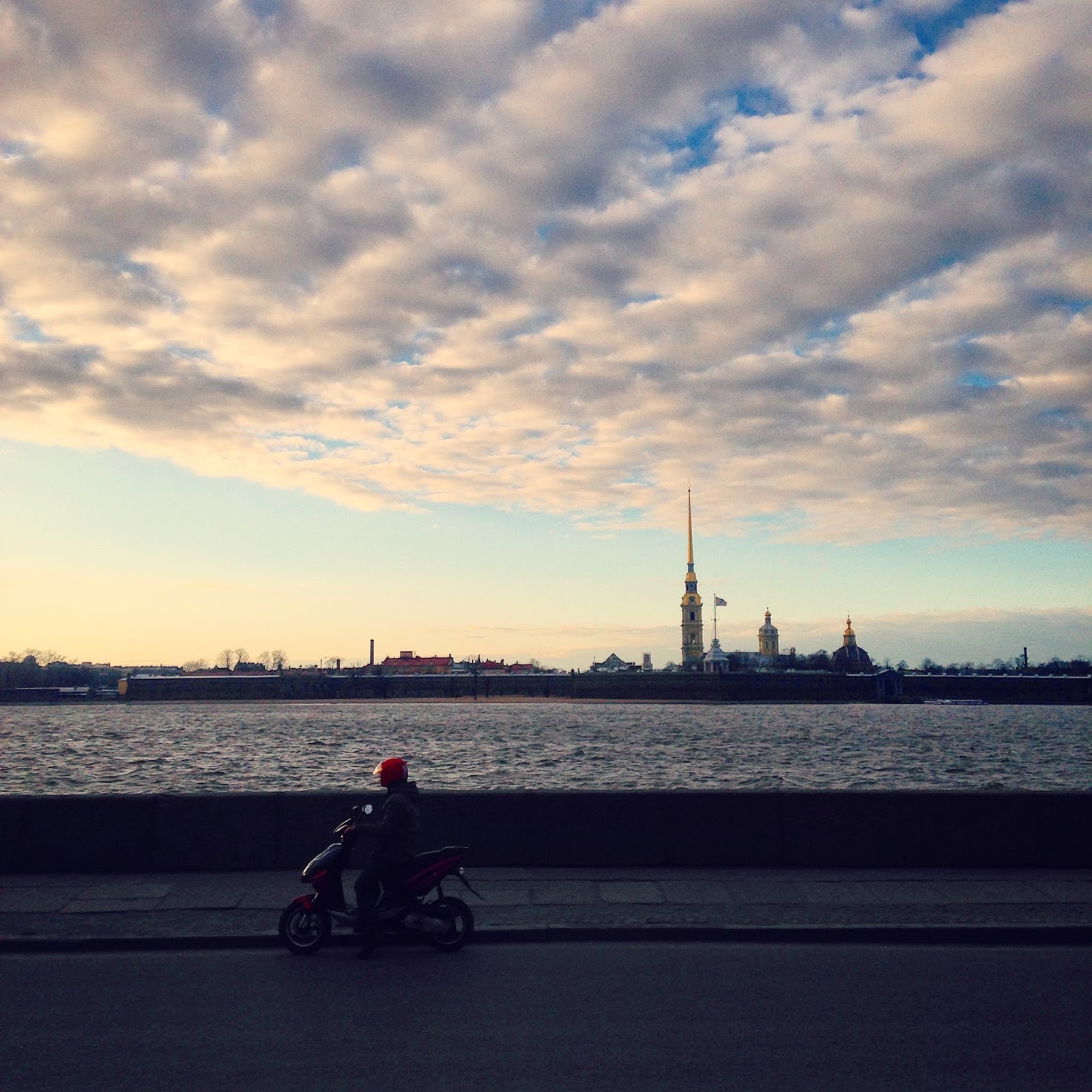
the continuation of Europeanisation at its finest - rental motor scooters that no one dares to use in Moscow traffic

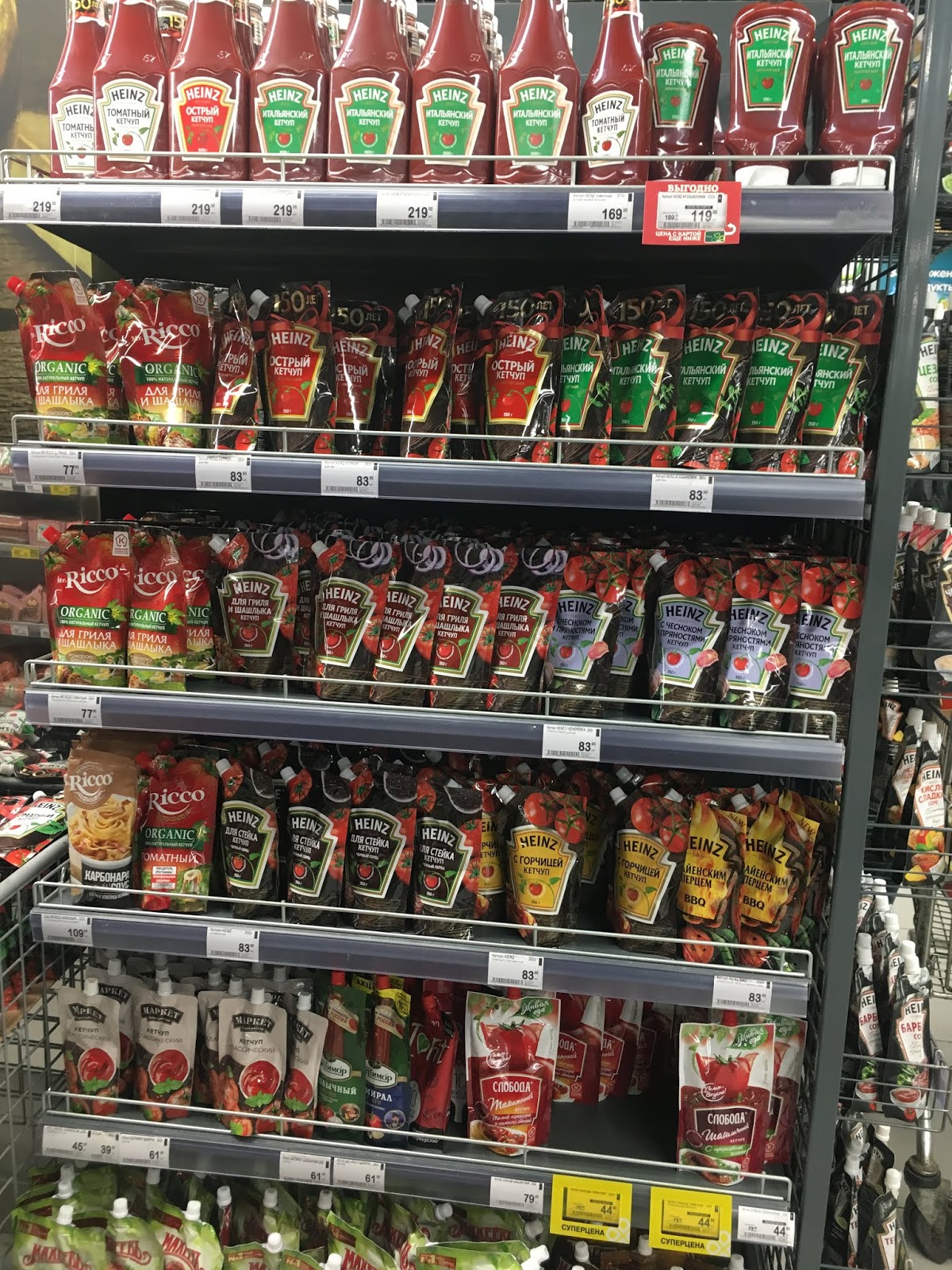
the ultimate selection of ketchups - the perfect base to a Russian-style pasta sauce

the blue velvet jacket ft. a MASSIVE organ

one of the beautiful renovations I was surprised with upon my return

Wednesday, 17 October 2018

Feeling Raf and Ready.

Back to Moscow, back to real life and the smell of pine tar in my trousers from an August spent sauna-building*, which I got sick of at the time, now puts a smile on my face as it transports me instantaneously back to the paradise that holds such a strong place in my heart and where I spent such a beautiful two months. Although, the weather here has been absolutely glorious and if I didn’t know better I would say that summer is only just beginning. 

I’ve just spent the last couple hours re-reading old Russia posts during my time here. So many things about living here still surprise me that I wanted to make sure I wasn’t repeating myself… apart from talking about croissants in at least four posts, it seems I’m in the clear. 

[I must admit that even now my day is orientated around when I get my daily breakfast of a coffee and croissant, and that I can rank the best coffees and croissants within a 10-minute walking radius of the academy, depending on your favourite flavour. I’ve always been someone whose day is brightened by even the smallest of moments; I find it very comforting that the guy at my favourite coffee place near academy (57p/98¢ for a cappuccino on par with an Italian one) not only remembers my order but also remembers I get it without a plastic lid. You’d be surprised but one thing Russians really do know how to do is good coffee. They have even developed their own type of coffee adding a favourite Russian ingredient that is present in much of what they eat - sugar. The phenomenon of “Raf” coffee (pronounced ‘rough’) took me a while to figure out but recently I finally saw one being made… One shot of espresso and a shot of sugary syrup of your choosing (salted caramel or lavender seems to be favourite around here) topped to the brim, baring in mind they are only sold in medium or large sizes, with frothy cream. Yes, not milk, CREAM. SINGLE CREAM. You are drinking 350ml or 450ml - well minus 20ml for the coffee - of sugar and frothy single cream. GOOD MORNING MOSCOW. Super-charged and ready to roll.] 

Anyway, one post dated 6th December 2015, titled “Stereotypes” made me laugh: 


“I am told that in Moscow the pace of life is even faster. You can have ten meetings a day in various parts of the city (which nearly doubles the area of London) and still have time for dinner and film in the evening!” 


How little did I know that I would end up living in Moscow for what will be almost 4 years…and that Moscow is exactly as I described it: busy and non-stop. I plan my days to the half-hour to fit in as much as possible as I try to make the most of this vibrant, culturally very dynamic, beautiful metropolis I live in and I find it gives me the push to do even more. Daily physiotherapy means taking the bus past academy through the centre every morning and I don’t think I will ever tire of getting that prized window seat on the way in as I ride past the Bol’shoy Theatre on my left, and Red Square and the Kremlin on my right. 

Although… the city does tend to have a way of really keeping you on your toes and even the very experienced Moscovite can be caught unawares. Often even the most well, tightly-planned days end up being the ones where you spend a lot of time running (not literally) around the city but getting very little done. Traffic, lack of centralised organisation within institutions and lots of people not really knowing what they’re talking about as well as quite a few that just can’t be bothered to do their jobs are amongst some of the factors that are generally to blame. Oh and traffic. Did I mention that? When the 6+ lane roads were built through and around the centre of Moscow, cars were few and far between but now it seems they weren’t built quite wide enough. Luckily, free Wifi for all on all public transport means that you can always keep people up-to-date on your whereabouts - listening to someone trying to have a phone conversation while riding in a very noisy metro carriage never fails to be entertaining. 

(Here, I suggest you refer back to the ‘Moscow Mule’ post about Russians not being aware of the ‘missed call’ function on their phones: http://arussianabroad.blogspot.com/2016/10/ ) 

Having said that, the city is becoming steadily kinder to its citizens and it’s amazing how much she continues to change and modernise at an alarming pace. Some things, such as all the signs in the metro being updated to also contain station names and exit signs in English, were understandably done for the World Cup. However, the new quiet metro trains with charging ports and interactive map-screens point to an exciting future with technological aspects in the city being far ahead of its European counterparts. In an attempt to change the Russian mentality of outdoor space just being a means to get between home and work and to encourage its citizens to enjoy outdoor public areas and the city they live in, outside spaces are transformed with the seasons and various public holidays. This last month saw a maze of plants, shrubs and trees brought in along Новый Арбат (Novey Arbat - the main street near my academy) with kiosks selling second-hand books for 100 roubles (currently £1.14/CAD$1.96) scattered among the greenery: a wonderful site in the centre of Moscow separating pedestrians from a very, busy road. Various giant swings and hammocks have been hung in a few key squares and streets throughout the city, while a variety of light-up structures pop up regularly inviting a wave of very similar-looking Instagram pictures but very much fulfilling their purpose. These installations range from sparkling mini Red Squares to a 100-metre long star-shaped tunnel of light, from grass animal sculptures to mini climbing walls in the shape of letters spelling out street names. 


colourful beanbag hangout 

Some institutions in the city do seem to be taking longer to play catch-up, my academy included. A decision to drastically change our curriculum, taking away a number of so-called ‘useless’ subjects and adding a couple new ones, four days after this academic year had already started reminded me that organisation here still leaves a lot to be desired and not all parts of Russian society are developing as quickly as others. I guess I shouldn’t be surprised when the library catalogue is still very much 'analogue' with index cards typed individually (seemingly on a typewriter) and sorted into tens of little wooden drawers and stacked along the wall of the reading room in the back corner of the questionably-built mansard. Getting something from the library (the door optimistically marked “library” opens up to a metre-squared space to stand in at a counter with two women behind it) involves filling out a slip with your book request while the librarians find your flimsy library ID card from a filing cabinet behind them and just picking a due date from the calendar hanging on the wall. It turns out I’m such a geek these days that one of the librarians knows me by name and regularly greets me in the hallway and outside academy (though I find this mildly crossing the line).


mysterious door leading to the 'bibliotek'

inside the mysterious 'bibliotek'

However, we recently found out that this lack of central, official system in academy can be absolutely played to our advantage. Exams for non-performance subjects are down to the teachers and certain teachers are known for being stricter than others. While Philosophy, History of Art and Aesthetics are generally feared for being almost impassible on the first try with a huge number of requirements from teachers before you even get to the exam, some teachers are much more flexible and simply require attendance. This was the case with a new subject recently added to our timetable, where the teacher asked how many lessons we thought would be necessary as the minimum attendance requirement to pass the course with an автомат (av-to-mat; automatic pass). What a wonderful system when the students can decide the minimum attendance rate. When he later asked the (in retrospect perhaps rhetorical) question on how to make students want to study of their own accord, being the keen student I have now become, I piped up that all the teacher needed to do was to find an interesting way to talk about the subject. His reply of “well, it’s hard to make this subject interesting” got a laugh from the class but made us realise we should have suggested a much lower minimum attendance rate…At least I’m already 50% of the way there.


Chat very very soon…exciting projects coming up, which I look forward to sharing with you. 


Masha xx 


*(technically баня-buildling pronounced ban-ya)

Monday, 13 March 2017

Living Safely (БЖД)

I honestly cannot not recall how this came up in conversation, however, I very recently learnt that while Russians use the same word for foot and leg - нога (na-ga) - and for hand and arm - рука (roo-ka), they do however have words to distinguish different types of bogies. Hard - козявки (kaz-yav-kee) and soft - сопли (sop-lee). I have always said that a language reflects the people and their culture.

My experience tells me that this country's relationship with social media is still in its honeymoon period, as opposed to the UK where many people are looking to cut back the amount of time they are on social media and are generally quite private about what they share. Here, there is a trend for posting almost entire blogs posts as captions on Instagram, sharing extensive and private thoughts, asking questions for debates, using Facebook and VK (the Russian equivalent of Facebook) to complain about different organisational systems in Russia and, of course, CONSTANT selfies and taking photos in front of signs and buildings (although people seem to prefer having pictures taken on their own and no smiling of course). In light of International Women's Day, which here is a bank holiday, my attention was brought to businesses offering big bouquets of roses for rent. Why? So you can photograph yourself with the bouquet and post it on social media to "create jealousy in your ex-partners or interest in potential partners". For the equivalent of £11, you have up to 10 minutes to take the 'perfect photo' and for an extra fee you can have a car and a driver in a suit included (although not showing his face) and even a Tiffany or Gucci gift bag. I would prefer Chanel myself.

Into the second semester and a couple new subjects have been added to our timetable. Namely, 'Theory and Practice of Present-day Education' (Теория и пратика современного образования) and 'Living Safely' (Безопасность жизнедеятельности). Initially confused on seeing these subjects in my timetable, I later found out they were obligatory for all 1st years (including second-time 1st years like myself) and decided to try and keep an open mind.... 'Theory and Practice of Present-day Education' opened with asking any problems we had noticed with the educational system in Russia - I decided to keep quiet, fascinated instead by the 20-minute outpour from a fellow classmate, who manages to turn up to around half of the lessons and has probably said about three words during class time since the start of the year. The lesson ended just as amusingly with the teacher spending 5 minutes trying to pronounce 'Oakham School'. As of yet, I am still not quite sure as to what we are supposed to be learning in this module. 

'Living Safely' was quite the shock to say the least. With a teacher who treats us like 12-year-olds just learning to write and a 'point' system for passing the module - gold stars and bonus points awarded for participation in class and not looking at your notes when answering a question, we spent the first lesson listing the different types of 'extraordinary' events that can happen and which can cause danger to human life. For homework we were asked to find the definitions of 'danger', 'catastrophe', 'accident', fire and 'explosion' as well as watch of video of Hiroshima so we know what to expect. This module should have been called "Expecting the Worst" or "The numerous ways a human can unexpectedly find themselves in a dangerous situation and how to define and classify them"...! To quote Mr. Positive himself, "...you need to know the main things that can cause danger to you in everyday life, those which are specific to the region of Moscow...there are around 30 different types to be aware of." Among other things, we will also be learning to put on gas masks and recite the different wind speeds of a tornado or a hurricane - What are we being prepared for? Having these lessons from a young age at school through to university, no wonder Russians are so cheerful! [For mental balance, I would suggest also having lessons called "How to live a pleasant and enjoyable life."] 

In other news, for quite a while now I have been confused about people walking around with straws sticking out through the lid of their takeaway coffee cups. On treating myself to a coffee after yoga, I realised that lattes are served with straws! Plastic straws to drink coffee?! Now if that's not a situation that can cause danger to a human being that you experience in everyday life then I don't know what is. 

Mid-March and we haven't had snow since February and I'm down to only one pair of tights under my jeans...things are looking good!

Bye for now,

A xx


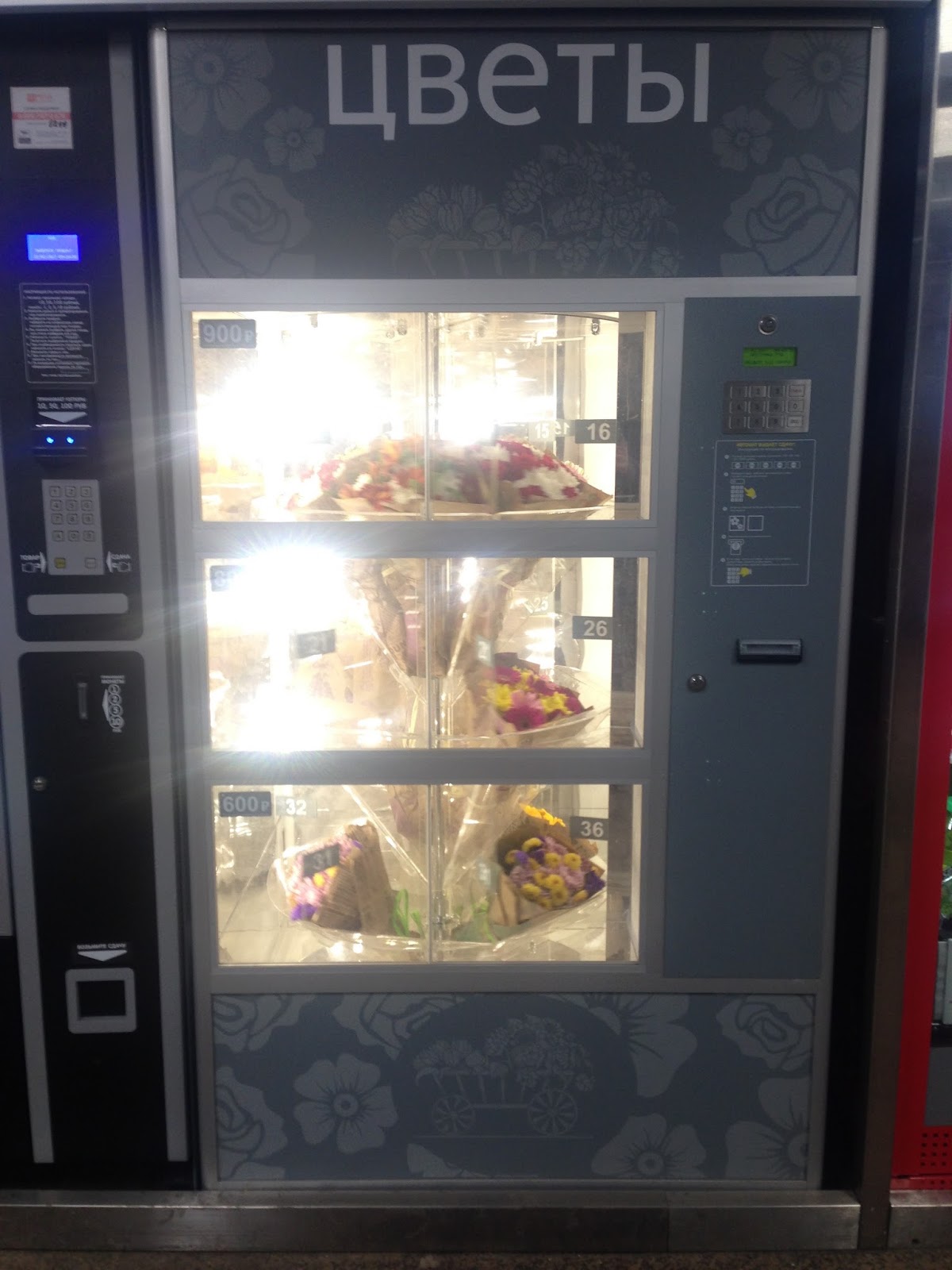
For the 24/7 flower dash

When you find secret hidden gems in the building where you study (well out of the way of dirty students)

Given to me in celebration of International Women's Day

Never-ending Moscow traffic

An early spring sunset


Tuesday, 4 October 2016

Moscow Mule.

1st September. 1st day of a new term at a new academy with new people with the first lecture scheduled for my year group at 12pm. Of course I missed it. I basically missed the first day. Thanks to delays in Frankfurt that meant I missed my connecting flight and arrived to academy straight from the airport with my small suitcase in hand (of course my checked luggage hadn't made it to Russia with me) and made it to the piano department a few minutes before closing time. Good start, Masha, good start.

The first couple of weeks were spent trying to figure out how I could minimise the time I was wasting as I tried to piece together the non-existent organisational system the institution seems to function under. It's interesting that Russians appear to have straight-forward/cut-the-crap and get-stuff-done attitude and yet everything is very difficult and complicated to actually get done. Where one email with all the necessary information to all students in the department would suffice, here they seem to have opted for the 'let's see how much the students can figure out/guess for themselves' method. It's a real test of whether you belong there....I suppose. With documents taking days to be ready, the piano department office deciding to close during the first week of term, and two weeks without language or harmony lessons because no one seemed to know which groups people were in let alone who was teaching them, it was all just the icing on a multi-layer cake.

Maybe we are spoilt on the UK or maybe that's where our tuition fees are going, but British universities do at least seem to be more than happy to supply all necessary information to new students in order to make sure everyone knows where they need to be and when. The academy in general feels behind in terms of being a modern-day institution where students are actively studying. Russians love tradition and I'm all for some aspects of tradition myself, for example, the exclusive tour new students are given of Elena Fabianova Gnesina, our founder's, apartment. However, I can't help feeling that things like the teacher typing up questions she wants us to answer for the following lesson and printing a copy for each of us would make sense in order to not waste 30 minutes of precious lesson time writing out the questions as she dictates and another 15 while she figures out how to work the CD player.

There is a standardised educational system for all students, which means that we also have History, Psychology and IT on our schedules in addition to basic music subjects. I did initially get excited about IT, thinking I would become a photoshop warrior in no time at all. Surprise, surprise (or increasingly less so as the case may be), all was not what it seemed. IT in Russian is literally "modern computer science" (современная информатика - sov-re-men-aya in-for-mat-ika). I found it quite ironic that they feel the need to put the word 'modern' in there at all considering that nothing about the lesson or the room is modern by any stretch of the imagination. Old computers, a demo version of an old software that doesn't save your work, and a teacher in a similar state. A classic Soviet reminiscer, Putin-lover, and foreigner-hater - especially Asians and Americans: "American students are less clever so they wouldn't remember everything I said today, but you all will, of course," and "No point speaking to Asians in Russian, they barely understand English. They really need separate lessons and more of them." <-- coming from one of the most technologically advanced countries...
He also never ceases to remind us of his never-ending breadth of experience, qualifications, achievements and knowledge as well as ownership of all the Apple products with "Of course, I already know all this" and "Of course, I already have the new version at home" being regularly-preferred catchphrases.

He commented that "Russian students are the poorest in the world." I am no expert but use of the superlative, based on stories I have heard about students in South America and other Asian countries, might not be completeley accurate. However, I do appreciate that buying a laptop for Russians on an average salary can cost more than a month's wages. This makes quite the change coming from Bristol, where everyone seems to own a Macbook pro or equivalent, quite apparent. [I think I might be the only one here so I try to keep it on the lowdown.] People generally seem to have tablets a lot more than laptops as, I am assuming, it is a cheaper, more practical compromise. Where I am used to half the class typing furiously on laptops as the teacher shares his/her fountain of knowledge, notes here are always taken with a pen and paper during lesson times, with one exception. There was no hiding who's who in our lecture with have with the sound engineers, who were all taking notes on their tablets while some pianists didn't even have a piece of paper with them. Ooops.

I found it interesting that our IT teacher also felt the need to actually ask people to refrain from answering calls during the lesson - something that would never even be considered in the UK. It shows the kind of culture Russian society seems to have turned into over the last few years at an alarming rate. I would say that the phone culture here far surpasses the phone culture in Europe or in Canada. [I have mentioned it before but I am continuing to feel its effects more and more.]

Nothing, I repeat, absolutely nothing will stop a Russian answering their phone when it rings. My piano teacher is very high up the list for guiltiest culprit - texting while I play and leaving the room on several occasions to answer calls just as Sonata no. 5, Mvt.1 by Beethoven is about to reach the recapitulation. My harmony teacher has no qualms about leaving the perfect cadence unresolved, clashing with the key of her ringtone as she strolls across the classroom to pick up the phone. A well-known Russian director I went to see giving a masterclass with multiple TV cameras pointed at him stop mid-sentence as he answered to let the other person know that he "can't talk right now" because he's "giving a masterclass". A well-known Russian actor giving a press conference about a new film festival also made quite the scene up opening his flip phone as he picked up to let his caller know he was a bit busy. And the never ceasing phone conversations during film screenings. I must be missing something. Either Russian phones don't have the 'missed call' function or they don't have 'silent mode'. I can honestly think of no other explanation for this kind of behaviour.

I was warned that life in Moscow would be tough - especially after living in St. Petersburg. I rarely get ill and when I do it doesn't usually last for more than a couple of days. Second week in Moscow, I got ill and I'm still recovering. No amount of lemon, ginger and honey or grated onion* seems to be helping. This could explain the elements of the Russian character that can appear, at times, quite tough and brutal. It's the only way to get through the winter, that's for sure. 

Although, the way people are treated on their birthday makes quite the contrast - as I learnt from the flood of messages that showered the first person in our year to have a birthday. Whereas in the UK, your birthday is an opportunity for your friends to get you as drunk as possible and/or dares to embarrass you or at least keep you in the spotlight all day. Russian birthdays are the opportunity for people to wish you a year full of happiness, joy, success, health, ambition, good friendships, and love to name a few. I can't quite decide which option is better...
I know which one I'm hoping for on my next birthday. The number of 20/21-year-old students that are married or living with partners and engaged is making me feel, dare I say it, quite old and, immersed in such an environment, I can't help feeling that my time is running out. No matter how quickly society is developing here, it is definitely still embedded in the mentality as a very important step for young people as a sign of success and a priority in terms of 'reaching adulthood' and becoming independent (from your parents at least).

Long days means I have a least been able to appreciate how magical Moscow feels late at night. I definitely think the city comes alive with the beautiful multi-coloured lights and a lot less traffic. People walk around without the stress of the working day and the centre of the city feels transformed.
I was reminded of walking around Rome with my mum on our last day there over ten years ago now and I can clearly recall the sensation of endless beauty and possibility that awaited me as we wandered the streets taking in the history and architecture one last time. 

The transformation is similar to that of a snowfall. In England, life stops and cities becomes deserted - completely calm and tranquil. In Russia, it covers all the grime and dirt from the millions of car on the road. In both cases the cities become magical and timeless. 


How different life is on this side of the world,

Lots of love,

A xx


*my flatmate from St. Petersburg's foolproof preventative 


Dream soviet oven - 40-years-old and still works like a dream

Sometime staying late to practise isn't so bad

New pedestrianised area as Moscow finally tries to build a city for people and not for cars

Moscow city lights


Wednesday, 29 June 2016

Alcohol in breakfast products.

I had to do a Russian literature exam the other day. 

A terrifying prospect, but made somewhat easier by the fact that it was multiple choice and the word for a multiple-choice test in Russian is угадайка (oo-ga-da-i-ka) that derives from the verb угадать (oo-ga-dat) meaning 'to guess'. 
[So to all those at uni that used to moan about having to revise for multiple-choice tests....]  

Although I am reaching the end of my first academic year in Russia, having unexpectedly stayed 6 months longer than planned, cultural differences continue to shock and surprise me. I wonder how long you have to live somewhere before you become fully accustomed to the people and the place. 

On a recent late-night trip to a nearby shop with my flatmate, having stopped in the dairy aisle, I decided to take advantage of his presence by asking him to explain the unknown products there that I still hadn't managed to figure out. 'Kefir' is a pro-biotic, fermented thick milk drink [for first-timers it might seem like sour milk] that I had already been lucky enough to have the opportunity to try on a trip to Moscow with my mother during my early teenage years, however, a bottle between the milk and kefir caught my eye. 

"There's alcohol in that one..", my flatmate joked. 

Turns out it wasn't a joke. Hidden among the most innocent of breakfast products was a type of kefir with the addition of alcohol to really make sure you have a great start to the day. Good morning, Russia. Good morning indeed. 

Coming to the end of my stream of auditions, I have been left needing to make the choice between St. Petersburg and Moscow for my next academic year. People have warned me that moving to the capital after St. Petersburg wouldn’t be easy and the question is whether I’m ready for “real” Russia; those who don’t live in St. Petersburg often claim it isn’t really Russian as it is far too European. [<— Although I beg to differ and I would sometimes even argue that it is not European enough for my liking….but that’s personal taste of course.]

While St. Petersburg values the importance of a work-play balance, Moscow is work, work, work - the pace of life is cranked into full speed and you have no choice but to keep up. Although if you're lucky, you might be able to catch up on sleep during the 90 minutes it takes you to get anywhere around the enormous city (nearly twice the area of London).  

St. Petersburg is by no means small, yet I rarely feel the overwhelming sense of size, which greets you the moment your step outside your front door in Moscow. In St. Petersburg, the high-rises tend to be concentrated around metro stations outside of the centre, which allows me to live in my cosy central bubble without feeling the cluster-phobic effect of the millions living in the city around me. A city where I already have my favourite coffee places and where I can get to anywhere I need to go within 40-60 mins as a lot of the city is (technically) walkable. A city where I can suddenly decide to go to a concert or a play or meet a friend for dinner last-minute and where most restaurants and bars are affordable. Although it is very hard to overlook the weather. Especially when more than 3 hours of daylight during the winter months is optimistic. Prior to moving, everyone warned me about the cold - fine, you buy yourself a good coat - but no one warned me about the lack of sunlight and the huge effect this has on your energy levels. As mammals, my body definitely didn’t understand why it couldn’t just go into permanent hibernation for a couple of months. During the winter, I was never able to get up before 11:30am and I remember coming back from Moscow one morning at around 10am and being shocked that it was still pitch black outside.

Moscow is a city that just feels inherently “Russian” in the sense of size, power and majesty. There is just so much space and so many cars. And there are millions and millions of people (around 17 or 18 million). Towers are spread throughout the centre and complimented by the 10-lane roads that connect them, the space between them only emphasising the power and grandeur that they represent. While others cities tend to have high-rises and towers concentrated in one part of the city - often in the centre - with small roads between them giving you the feeling of being in a maze and with the buildings getting smaller as you get towards the suburbs, here it’s the other way around. 
This, undoubtedly, has an effect on the people living there. Living in Moscow is about working. Socialising seems to be a very much side-lined activity and hard to program outside of work considering the time it takes to get anywhere and the very loose ‘working day’ which can end anywhere between 5 and 11pm. Nice areas to walk around or meet friends for coffee or lunch are limited and are in any case often quite expensive. The slightly better climate means that the 7-day working week can continue, without question, all through the winter. Not a second to waste.  

So a choice needs to be made. Do I let myself get swept up in the rapidly-changing, constantly high pace of life in Moscow or do I stay in the comfort of a city that feels slightly closer to home.

[Or....do I just run away to Italy. A recent stopover there, after a concert in Germany, confirmed that true love never dies. After a brief moment of forgetting the word for ’sun’ and repeating the Russian word over and over again, my brain switched into gear and everything came flooding back. Eating three weeks worth of pasta, pizza and ice-cream accompanied by Aperol and Italian house wine over the few days just about managed to satisfy my cravings.]

For now, though, I going to take full advantage of 23-hour daylight with late-night bike rides, early morning walks followed by yoga and last-minute evening trips to the theatre and maybe the odd glass of wine on a rooftop. 

Winters are for sleeping and summers are for playing.

Lots of love,

Masha xxx

St. Petersburg's surprise summer storms - keeping you on your toes

Late-night, post-theatre river love

Midnight, white night, bike night

Middle of the night sunrise

Popping back to Berlin for a few days, keeping it real and keeping me sane.

Tuesday, 3 May 2016

Living in a city built for cars.

Feeling worse for wear, tired, damp and wedged between a rather large man and a window and with my phone out of battery, I had no option but to endure a twenty minute conversation about the bus we were on. What was the height of the ceiling? Had the bus been made in Russia or in Germany? Did it run on diesel, natural gas or petrol? Did any of the rods running along the ceiling have anything to do with its fuel efficiency? Did the colour of the bus have any correlation with the type of fuel it ran on? On and on he went and managed to drag three complete strangers into the conversation, which he had initially started with the conductor - this time a poor, young girl who clearly wanted nothing to do with it but seemed to have all the answers.

To be honest, any kind of travel in St. Petersburg or Moscow is eventful and not easy to say the least. I have already recounted my difficulties with the metro in Moscow, but the metro is one of a plethora of available options of "public" transport. Unfortunately, in St. Petersburg, there is a general mentality among older generations of 'if you have a car, you use it'. Following the Soviet Times, where owning a car was rare and involved paperwork and months of waiting, welcome to the ultimate time of 'if you've got it, flaunt it.' For a place with a huge amount of people living in it, the city is surprisingly unaccommodating to people! Many roads will have three or four lanes in each direction (car lanes - no bus lanes at all) while people, scooters, and bikes are left to battle it out on the pavement. Not a bike lane in sight in a city that is flat as a pancake. Ironic compared to mountainous Bristol where you find bikers on every corner, sweating up and down the hills in the sun and getting soaked in the rain, often probably questioning their decision to bike that day. Unfortunately, the amount of cars also seems to contribute to a sometimes unpleasant amount of dirt and pollution in the city caused by traffic jams throughout the day. Discovering an amazingly quiet part of the city on the east side of Vasilevsky Island, I realised how pleasant the clean air was and how I had gotten so used to the constant rumble of cars and dirt that I was stunned by the stillness and purity of the bay.

So, the logical option is to take a form of public transport, in order to reduce the number of cars on the road. Brace yourselves. Taking a bus involves a scarily high probability of being swarmed by baboushka's in a rush to get their favourite seat on the bus (I still wonder where all the dedoushka's are) before you get stuck in the traffic caused by no bus lanes and the huge number of cars. Taking a marshroutka (a mix between a bus and a taxi - a minivan that follows a certain route and will pick up and drop up passengers anywhere along that route) involves being confident enough in your knowledge of the city and the language that you know where to get off and can explain that to the driver, who is very rarely Russian himself.

The metro might seem like a viable option, with the guarantee of no traffic jams and a very frequent service but you need to add 10/15 minutes to every journey to allow for the seemingly endless escalator ride in order to reach a depth where it was safe to construct a metro in a city built on swamp land. My flatmate is a huge fan of trams and is often excited by the idea of taking his favourite old tram (often no.6), yet the trams don't offer viable routes through the centre and it is never really clear where I can actually get on.

Going slightly longer distances, such as that between St. Petersburg and Moscow, I often take the night train. The novelty soon wore off unlike the taste of the stale croissant, vacuum-packed salami and curdled yogurt that they serve you for breakfast. I accept that I will never understand the people who feel the need to set their alarms an hour and a half before arriving in order to waste time fussing around in the compartment, hugely reducing the already limited amount of sleep you can manage to get on the 8-hour journey; the best earplugs in the world won't block the snores some people manage to produce.

So I have taken to riding on a ex-flatmate's scooter around the city and I feel like superwomen. The best combination I could find between speed, ease and flexibility... I am worriedly awaiting the day she finds time to stop by and take it back...

Back in England for a week over Easter and I realised how much I miss driving - there is nothing like putting an old CD on full blast (I could only find Green Day and Britney in the car...shame) and driving around in the countryside without another car in sight.

The flight there left me with one question that I still haven't been able to answer: why is it so hard for people to stay seated until the seatbelt sign has been switched off?!

Transport worries aside - the city has transformed from the snow-covered wonderland it was a few months ago. White nights are arriving quicker than I thought and there is something quite magical about having the sun shining nearly 24 hours a day. Four in the morning looks very similar to eleven in the morning as well as eight at night and I am told every day, by friends and acquaintances alike, that the white nights are absolutely spectacular. I can't wait.

Lots of love,

A xx


The quiet spot I found

Writing a 'retro' letter to a friend using ink and a quill in the HUGE main old post office on Pechtamskaya

Chaki the Cat agrees that working is for winter time


Monday, 29 February 2016

Preparation vs Traveller's Instinct

No matter how many times I fly, I still get butterflies and that flutter of excitement as I walk through the gate to board the plane. Even just looking at the departures board puts a smile on my face - I could go anywhere.

People who know me well won't be surprised to hear that within my first seven hours in Düsseldorf, I managed to find a great little Italian restaurant (the head chef was, of course, Italian) where I could finally satisfy my craving for a big plate of spaghetti ai frutti di mare. It was delicious. To be fair, in a country known for its meat and chips, as a pescatarian, I was left with little choice... It was so good that I went back twice more during my three day trip. (Although the second time I was devastated to find out they take Saturdays off and resorted to calling my mum for consolation.) I did generally find Dusseldorf to be quite a business-orientated, commercial and industrial city, and this was reflected in the architecture, food, bars, and restaurants on offer - not hugely interesting, quite touristy and generally over-priced. A fellow pianist I met there convinced me to be brave the streets of Aldstadt - known as Germany's 'longest' bar - and join him for a beer on Saturday evening. Despite the stag parties and out-of-towners who had popped into town to gorge themselves on cheap beer and cheesy music, standing on the streets surrounded by Europeans (without a hat or scarf!) with 1,50€ beer in my hand reminded me of being on the streets of Porto last summer and brought a huge smile to my face as I remembered how much I love being in Europe.

This didn't last long.

The next day - a Sunday - and it was drizzling as I spent three hours walking around with a bag full of music trying to find an open cafe with wifi, having forgotten that in Europe everything is CLOSED on a Sunday!

[I have been spoilt with the 24-hour Spar on my doorstep and array of 24-hour bars and cafés in St. P.]

Three days of quaintly-coloured houses and excessively clean residential streets and I was ready to move on.... to Vienna. A city where a ticket to the opera (3€) cost me less than my matcha chai latte (3,20€); it really is the capital city of music and I, unexpectedly, fell completely in love. The city is beautiful, not too clean and not too dirty, not too big and not too small. I was aware of the history and culture in the city but I was expected the place to be much more dated and stuck in the past - more similar to historical rich cities I have visited in Italy. The history is without a doubt there yet the place feels very current, dynamic and vibrant. A very fine balance between history, present and future, which is normally hard to get right but felt effortless in Vienna with the mix of charming little cafes, shops, and bars.  Not in the mood to make friends at the hostel, I revelled in taking a few hours each day to just wander around even if, surprise surprise, I did get lost a few times, having to rely on GCSE German to try and find my way back. The fact that most street names don't fit onto one line on the road sign is surely a sign that they are just too long?!

Somewhat on the expensive side for my limited unemployed-self's budget, I ate most of my meals buying food from supermarkets and I was baffled that lots of food shops seemed to open at 7:40am - very specific. I guess they decided that 7:30am was just that little bit too early... and thus I was deprived of my croissant breakfast as I made my way to the airport on the third day for the next stop on my whistle-stop music conservatory tour. Feeling destitute without my croissant, I was faced with the sad truth that public transport wasn't my best friend in this city either - another one to add to my list. The strength needed to open train doors on the metro often resulted in squeezing through the tiny gap on one side I had managed to create or someone taking pity on me and opening them for me and making it look ridiculously easy. The transport issues didn't end there. Round 2 of Alex getting on the metro going in the wrong direction when I was already cutting it fine for my early morning flight to Hamburg resulted in arriving to the airport two minutes before check-in closed... Though without running or even breaking into sweat. All in good time. Actually - I'll give you a tip - it's the most efficient way to travel. You get the best choice of seats if the plane isn't full - a guaranteed full row of seats on every flight. And I went straight through security and straight through the gate. No messing around. Even had time to douse myself in Chanel on the way - a surefire way to make friends on the plane.

In Hamburg, I was depressingly reminded of the English winter I had tried to escape. Wind and Rain. Although this city felt the most down-to-earth and studenty of the places I had been to so far - not only due to the fact that it seemed perfectly acceptable to light up a joint with friends in a bar. Having made it to my 11am meeting, I realised that I had perhaps taken my habit of 'who needs to prepare - I can just follow my gut instinct' one step too far as I had absolutely no idea where my hostel was, no wifi and no map. Three hours of walking around and few pointless metro rides, while desperately hoping my gut traveller's instinct would steer me in the right direction and I managed to find a hotel who found and printed directions to my hostel (4km away - I wasn't even close).

Dancing and chatting with friends into the early hours meant I was still up to see the most beautiful sunrise and so I decided to wander down to the harbour for the fish market to try a local Fischbrötchen and to get a proper view. I sat on the harbour wall eating my fish sandwich while thoroughly enjoying the spectacle of over-enthusiastic fruit sellers trying to bestow their fruit baskets onto unwilling tourists, while other stall holders rushed around trying to save their produce from some unannounced high levels of seawater, consequential flooding and seagulls trying to scrounge anything that just out of their reach.

The spectacular sunrise aside, I admittedly didn't fall in love with the place as I had done in Vienna and the sound of Berlin Calling was too strong to ignore...so I packed my bags and paid the full 8€ for the 3-hour bus ride to Berlin - with a huge grin on my face the entire way.  Despite the excitement of visiting new places, it can also be tiring and difficult and there is nothing like returning to a place that you know and already love.

There is a growing worry that Berlin won't be the same place is it now in a few years times. The unbelievable freedom for self expression and the mix of cultures - facilitated by the relatively cheap cost of living and the sheer amount of space - that you find there is hard to encounter elsewhere. Yet, this has the potential to create a vicious cycle, which means that such a wonderful, enlivening place can also be its own worst enemy. As a place becomes for 'trendy' and popular, more people arrive, prices go up, and, ironically, the base of artistic (and often poorer) people who create the quirky culture and social 'buzz' can no longer afford to live there.

Thinking about this as I walked through the streets of Berlin on my way to meet friends, who had also moved to Berlin a couple years ago for that very reason, I began wondering about where the "energy" or "feeling" of a place comes from. To what extent do preconceptions play a part? Is it the difference between knowing about a place before you arrive and arriving completely blind on a whim? Or is it based on certain characteristics you already look for in any place you visit, regardless of any prior knowledge or understanding? How is it you can feel the energy of the place within a few days of being there? I will always try to give any new place a few days of exploration and open-mindedness and I like arriving without knowing too much in order to form my own impression, although a little bit of history and a quick glance at a map definitely helps to get my bearings. However, I am often quick to judge and I can normally tell pretty soon if it's the right place for me. All of which brings me to the conclusion that it's hugely based on the people. The people who create the way of life, who create the shops, bars, parks, museums, buildings, industry, music and art.

Not one to make life easy for myself, I was constantly on edge keeping an eye out for ticket inspectors on the metro in the hope of saving a few euros so that I could buy more cheese to take back to Russia. Without a local sim card and no way of contacting people I needed to meet, it was slightly frustrating to find that lots of places seemed to have gone against the trend of the last few years by no longer having wifi for customers to use and some places even banning laptops. Shock horror they want people to actually talk to each other...! But with my own set of keys to my friend's apartment, I felt completely at home...even knowing which exit to use getting out of the metro - a undeniable sign of a local.

And before I knew it, with my bag full of cheese and pesto, having got completely carried away in Lidl, I was back to Moscow where I strangely felt warmer than I did in Germany. (They tend to go overboard with indoor heating in Russia). A place where three people are needed to check tickets on a nearly empty train: two to block each end of the carriage while the third checks the tickets - for a train that you can only board by going through ticket barriers anyway. A place where the entrance to the metro is nowhere near the exit so that trying to get back into a station you came out of can be somewhat challenging. A place where people are running everywhere, trying to get as much done as possible, but where you realise you actually spend half your time in (and on) the metro. And finally back to St. Petersburg to find temperatures back to around 0°c, the ice on the canals and rivers starting to melt and our cat lying on my bed awaiting my return.


A xxx


Düsseldorf: the place of alien trees and book fridges


Spaghetti ai frutti di mare
Sunrise on Sunday morning in Hamburg


Flooding issues...


Vienna: the most awful green for a concert hall


Standard parking: kind of found a place, kind of in it...

How to learn Russian: take part in a cake-decorating masterclass.... 


Monday, 28 December 2015

Moscow loving.

'Time flies' 
A phrase technically implying that the time passed felt shorter than it actually was and a phrase that, on the plane home for Christmas, I would appropriately use to describe my last three months in St. Petersburg. However, ironically I also feel like I have lived there for years, much longer than three months at least, and so contradictory to saying that the time has 'flown'. (If only my ability to speak Russian reflected having lived there for years…!)  

My decision to stay longer than the originally intended three months has been met with many a confused look and questions of why I even came here in the first place and why on earth I like it so much. What’s not to like about a city with lots to see and do, great people and stunning architecture? Lack of affordable fresh fruit and vegetables along with dirty air meaning I have to wash my hair every other day (much more often than the weekly wash I could get away with in the UK) and tiredness as the result of constant darkness I wouldn't say are top of the list for reasons to stay. My father asked me what I wanted for my first dinner back… a plate of fresh vegetables and salad please. Ideally freshly harvested and put straight onto the plate and maybe a tank of fresh air and some sunlight. On a recent trip to Moscow, I saw sun for the first time in weeks and felt like Christmas had come early. I was running around like a small child all day! In answering these questions, I find myself trying to explain many beautiful elements of Russian culture and characteristics of Russian people which we don’t hear about in Western Europe. The stereotype of the stern-looking Russian has been challenged by the countless generous and very patient people I have met who are always willing to help. Russia's history can be found on every corner and many positives aspects from the Soviet Era, such as culture (art, music, film, theatre) and education, are still very important to the Russian people today. There is also just the feeling of SO MUCH SPACE. Yes, this does mean getting anywhere takes a while (at least 40 mins) and so I spend at least a couple hours a day walking or on public transport. However, you can feel the vastness the place and the vision that Peter the Great had for his city. The seemingly endless buildings that line the Neva (the main river) dotted with points such as The Peter and Paul Fortress really is a sight to behold. 

I felt like a true Russian taking the ‘красная стрела’ (a famous night train) from St. Petersburg to Moscow last week, chatting to two older Russian women while sat on red velvet mattresses, interrupted only when a train steward came to take our breakfast order. I realised I hadn’t been to the capital since I was fourteen years old and honestly, at the time, hadn’t been that impressed with the place. Having been told that Moscow has changed a spectacular amount over for the last few years, I didn’t really know what to expect but I must say it is amazing how differently you view a place eight years later, armed with much more cultural and linguistic awareness as well as much more experience travelling and living in foreign cities. I felt content and at ease as I met my grandfather at the station and we went back to his place for breakfast. It is also possible that seeing sun for the first time in so long might have gone to my head. Seeing the Kremlin, Red Square and other mains sights triggered memories of seeing it as a child (and not having understood the importance of it all!) It was so nice to walk around the historical centre, stunningly decorated in New Year’s lights*, with fresh eyes and I was also finally able to appreciate just how big the city is. With an area nearly twice that of London and a population of 12million+ I am definitely glad I had family and friends to help show me around. The one time I was left to face the metro alone and, of course, I ended up on the wrong line going to the wrong direction. How tourists manage is a mystery to me.
Recent social and industrial developments in Russia aside, a trip to register for my internal passport (Russians need to have an ‘external’ passport and an ‘internal’ passport) meant that I was directed to a derelict building in the middle of a building site which was apparently the ‘official’ office for dealing with my situation. After going up some dodgy, strange-smelling stairs and waiting in a deserted corridor for 45 mins, a woman call me into her office, where a very old computer that kept playing up and piles of papers everywhere meant it took another 30 minutes to process my application. Some things may never change in Moscow...!

A week at home seeing friends and family is giving me much-needed rest and rejuvenation before I face round 2 of celebrations back in St. Petersburg (see * below). 

Lots of love, hugs and kisses (yes I'm feeling generous - it is Christmas after all!)

A xxx

*While Europe celebrates Christmas and New Year's Eve in different capacities, a ban on Christmas festivities in Russia during the Soviet Time meant that New Year's Eve became one 'super' celebration. Presents and a big meal with the family take place on New Year's Eve and after midnights people go out to join their friends to celebrate the New Year until the early hours. Light decorations in the city and 'Christmas' markets are, therefore, all aimed at New Year celebrations as opposed to Christmas celebrations, which take place on 7th January in a smaller capacity.


so much space...

the remains of a soviet style communal kitchen

a very russian spread

on the night train

average amount of traffic in moscow


the run-down building I was directed to to do my passport